

3 days ago I posted this on LinkedIn.
![A linkedin post by Imran Khushal that reads as: [Most people use AI to THINK and WRITE = shite content Some people THINK and use AI to WRITE = average content Few people THINK and WRITE and use AI to EDIT = better content AI is not the problem here, how you use it is. ]](https://substackcdn.com/image/fetch/$s_!TwEm!,f_auto,q_auto:good,fl_progressive:steep/https%3A%2F%2Fsubstack-post-media.s3.amazonaws.com%2Fpublic%2Fimages%2Fff50e742-0769-4441-8ada-ca122a0f3f6c_770x582.png "A linkedin post by Imran Khushal that reads as: [Most people use AI to THINK and WRITE = shite content Some people THINK and use AI to WRITE = average content Few people THINK and WRITE and use AI to EDIT = better content AI is not the problem here, how you use it is. ]")
4 lines. No image. No hook formula.
[Most people use AI to THINK and WRITE = shite content
Some people THINK and use AI to WRITE = average content
Few people THINK and WRITE and use AI to EDIT = better content
AI is not the problem here, how you use it is. ]
71 reactions. 41 comments. 4,700 impressions.
What struck me wasn’t the numbers. It was the debate in the comments. Half the people thought using AI to write and edit is perfectly fine. The other half thought AI shouldn’t be anywhere near the writing process at all.
Both sides missed the real problem.
The problem with AI-written content
There are a few layers to this.
The first is the writer-reader contract.
When you write, there’s an unspoken agreement with your reader. They expect authenticity. They want your struggle, your experience, your proof. The real story of how you figured something out. When that’s missing, they feel it. They can’t always name it, but they feel misled.
The second layer is authenticity at scale.
If you use AI to write and so do a million other people, and none of it contains lived experience, everything starts to sound the same. Think about Atomic Habits. Imagine an AI wrote something with the exact same frameworks but no James Clear — no story, no baseball bat, no years of recovery. Just “do this, do that.” Flat. No human connection. That’s what happens when AI writes without a person behind it.
The third layer is the economic one.
Ghostwriters and writers feel threatened, and rightly so. When AI can produce content at scale, it disrupts how they earn. That’s a real concern and it’s worth acknowledging.
So the problem isn’t the tool. It’s the absence of the person using it.
How to write with AI and still sound like yourself
Here’s what I actually do.
Step 1 — Build your database
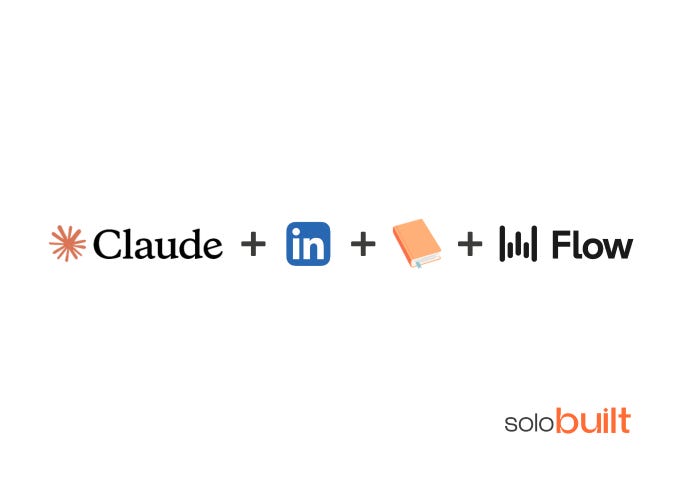
Go to your LinkedIn settings, find Privacy, and download your data. If your content isn’t AI-written, you now have a database of how you actually think and write. Feed that to Claude. Instantly it knows your voice, your frameworks, your way of saying things.
You can do the same with any content you’ve created — a book, training material, keynote transcripts, anything. The more you give it, the better it knows you.
Step 2 — Speak instead of type
I use an app called Wispr Flow. I’m not typing this edition. I’m speaking it.
Wispr Flow transcribes your words, cleans them up, and converts them to text. I’ve been using it for nine weeks. In that time I’ve spoken over 50,000 words into it. My speaking speed is around 128 words per minute — roughly four times faster than typing.
That means 50,000 words of how I actually talk, think, and express ideas. Feed that to Claude alongside your LinkedIn data and it has a real picture of you, not a generic version of you.
Try it free for a month here: wisprflow.ai/r?IMRAN237
If it works for you, great. If not, find another voice-to-text tool. The point is to build a database of your spoken words, not to use any specific app.
Step 3 — Give Claude the Wikipedia list
Search “signs of AI writing Wikipedia” and you’ll find a page that lists every pattern that makes AI content feel like AI content. Copy the URL and paste it into Claude. Tell it to read the page and avoid every pattern on that list.
Here’s the link: Wikipedia — Signs of AI Writing
Step 4 — One rule that changes everything
Tell Claude this before every session:
“Always use what’s in my database. Do not make up things I never said or meant. If you create something from thin air to fill a gap or connect the dots, make it bold so I know to review it.”
That one instruction alone cuts out most of the hallucination and generic filler.
What you have now
Your LinkedIn content. Your spoken words from Wispr Flow. Clear instructions to avoid AI writing patterns. And a rule that flags anything fabricated.
That’s a system. Your content, packaged in a way that makes sense — whether you use AI or not.
Next edition
I have 3,000 LinkedIn conversations from 2020 to 2026. I’m using Claude to go through them one by one and reach out to those people in an authentic way to generate real business.
I’ll show you exactly how.
Until next week.
Imran